How to Improve Throwing Velocity and Swing Speed: Proven Training Methods
If you’re a baseball athlete looking to throw harder, hit farther, and move more explosively on the field, you’ve probably searched for that perfect program or drill that magically boosts baseball velocity. The truth is—there’s no magic drill. But there are proven methods used by the best sports performance coaches in the world, including those here at Overtime Athletes, that consistently develop elite-level power, rotational strength, and speed.
Whether you’re a pitcher trying to add 5–10 mph to your fastball or a position player trying to increase swing speed and exit velocity, everything starts with one question:
Does your training improve your ability to produce force and transfer that force efficiently through your entire body?
If not, you’re leaving velocity on the table.
In this article, as an experienced coach who has worked many baseball athletes—from high school prospects to pro-level talent—I’m going to break down the five most important training methods you need in your program to maximize baseball velocity:
- Mobility (hips & spine)
- Max Strength Training
- Ballistic Training (med balls, explosive throws)
- Plyometrics
- Core & Trunk Strength for rotation and energy transfer
These are the pillars behind any high-performance baseball program—and they’re the exact methods we use at Overtime Athletes to build elite explosive athletes. Also go see our previous article How Pro Baseball Athletes Train for Peak Strength and Power!
Why Mobility Is the Foundation of Baseball Velocity
If your hips and spine don’t move the way they’re supposed to, your body has no choice but to leak force, compensate, or break down.
Every bit of baseball velocity—whether it’s pitching velocity or swing speed—requires a full, efficient kinetic chain. That chain is only as strong as your mobility allows.
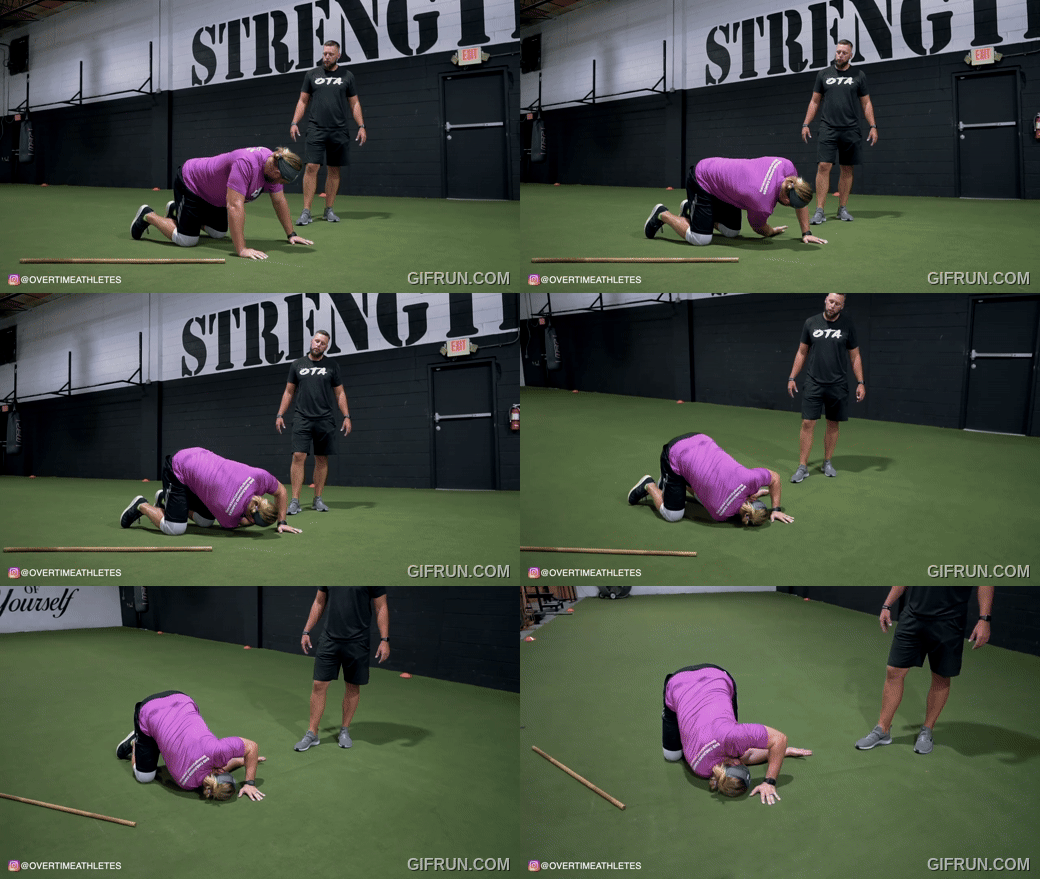
Hip Mobility
You need adequate hip internal and external rotation to: 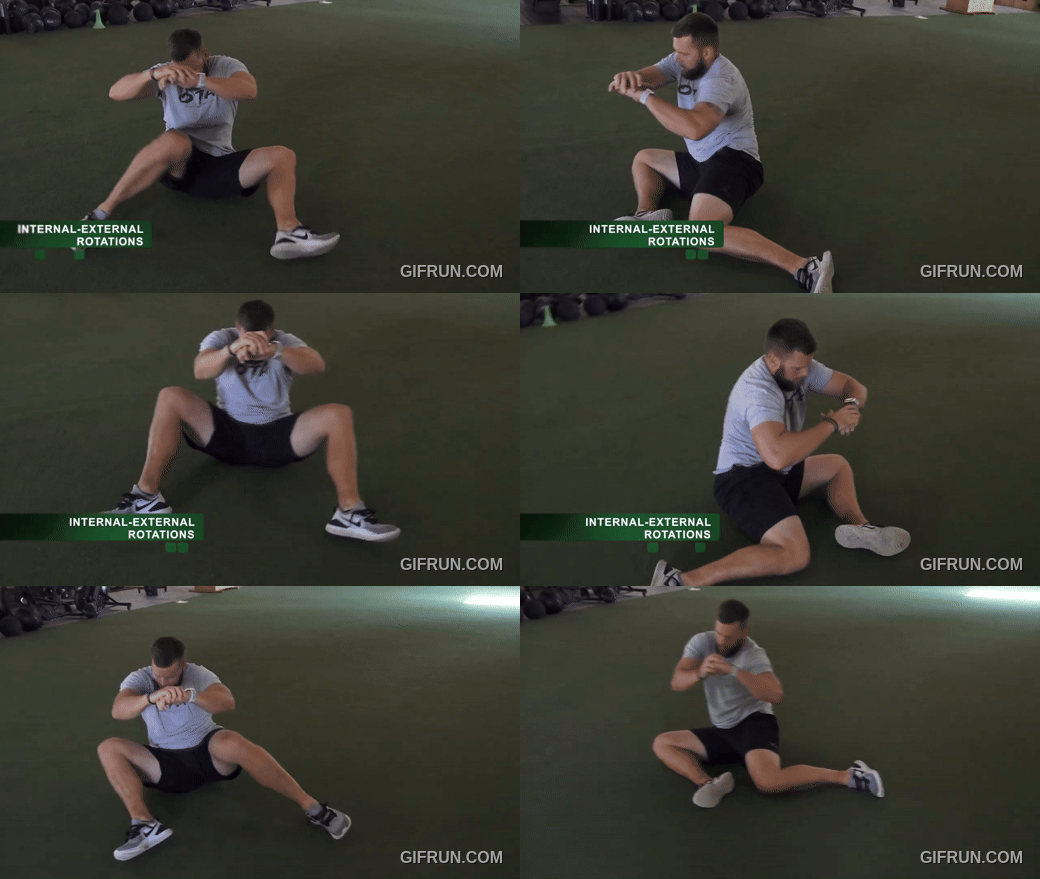
- Load into your back hip during your pitching or hitting coil
- Create better hip-shoulder separation
- Maintain stability when you stride forward
- Produce force from the ground through your torso
Tight hips lead to overusing your lower back, losing posture during swings, and cutting off your pitching mechanics.
Spine Mobility
Thoracic spine rotation and extension allow you to:
- Create whip-like rotational torque
- Improve trunk angle and posture during the throw
- Generate better bat speed with less effort
- Reduce the risk of shoulder and elbow overuse injuries
When your thoracic spine is stiff, the shoulder is forced to do all the work—exactly what leads to dead arm, elbow pain, and stalled pitching velocity.
Mobility unlocks your body’s ability to access velocity.
Max Strength: The Engine Behind Baseball Velocity
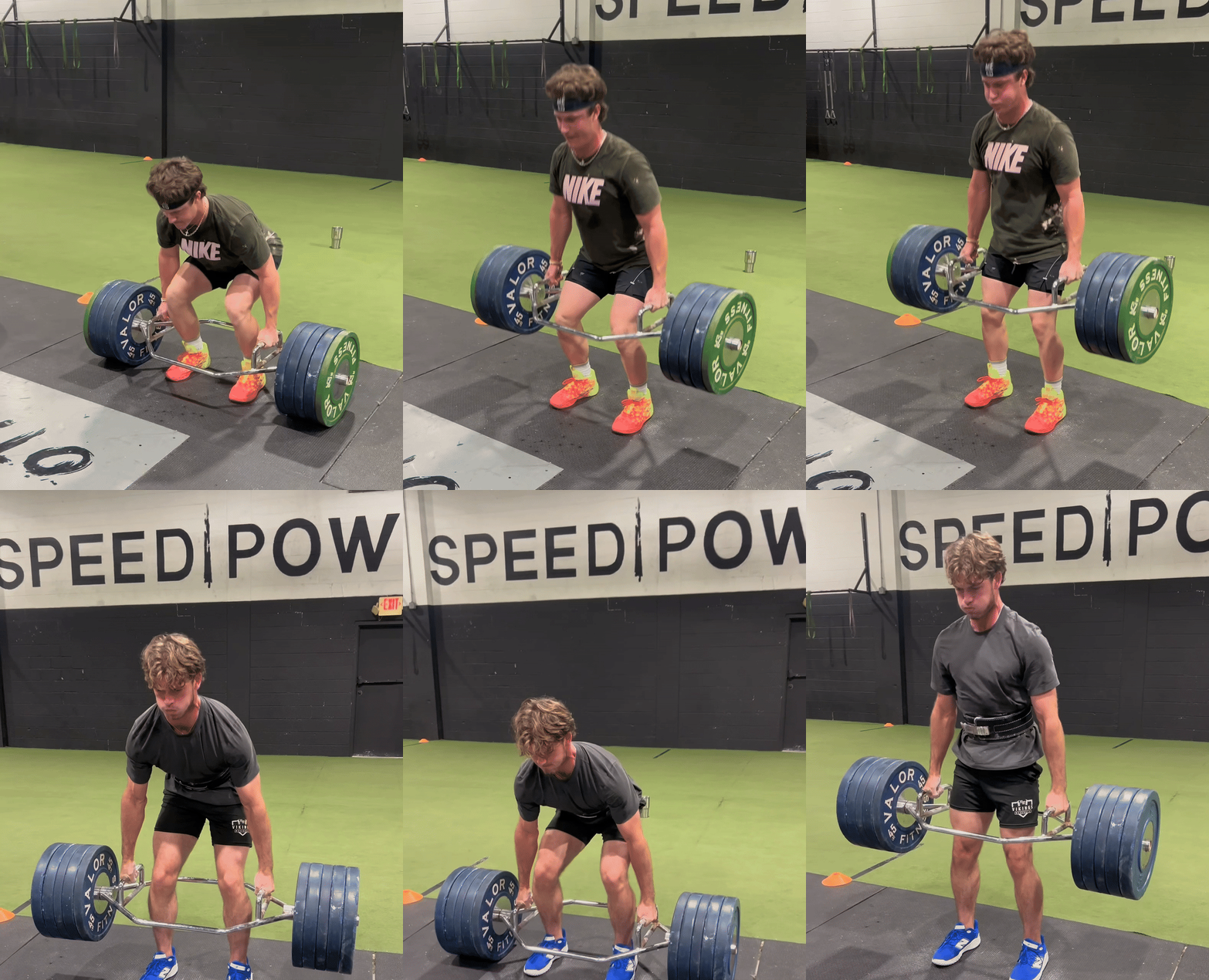
A lot of baseball players think lifting heavy will make them “tight” or “bulky.” That’s a myth.
In reality, max strength is one of the most important factors in improving force production, which directly increases baseball velocity.
Why Max Strength Matters
When you build strength in the lower body—especially the glutes, hamstrings, quads, and posterior chain—you increase your ability to apply force into the ground. More ground force = more rotational speed = more velocity.
In pitching and hitting, your entire movement is built from the ground up:
- You load the back leg
- You drive forcefully into the ground
- That force transfers through the hips
- Then through the torso
- And finally into the arm or the bat
If your legs are weak, your velocity ceiling is low—no matter how clean your mechanics are.
Key Strength Movements for Velocity
A proper baseball strength program should include:
- Split squats and rear-foot elevated split squats
- Trap bar deadlifts
- Hip thrust variations
- Glute-ham raises
- Front squats
- Lateral lunges and rotational lunges
Heavy lifts like these build the horsepower you need to throw harder and swing faster.
Ballistics: Med Balls & Explosive Throws That Train Real Baseball Power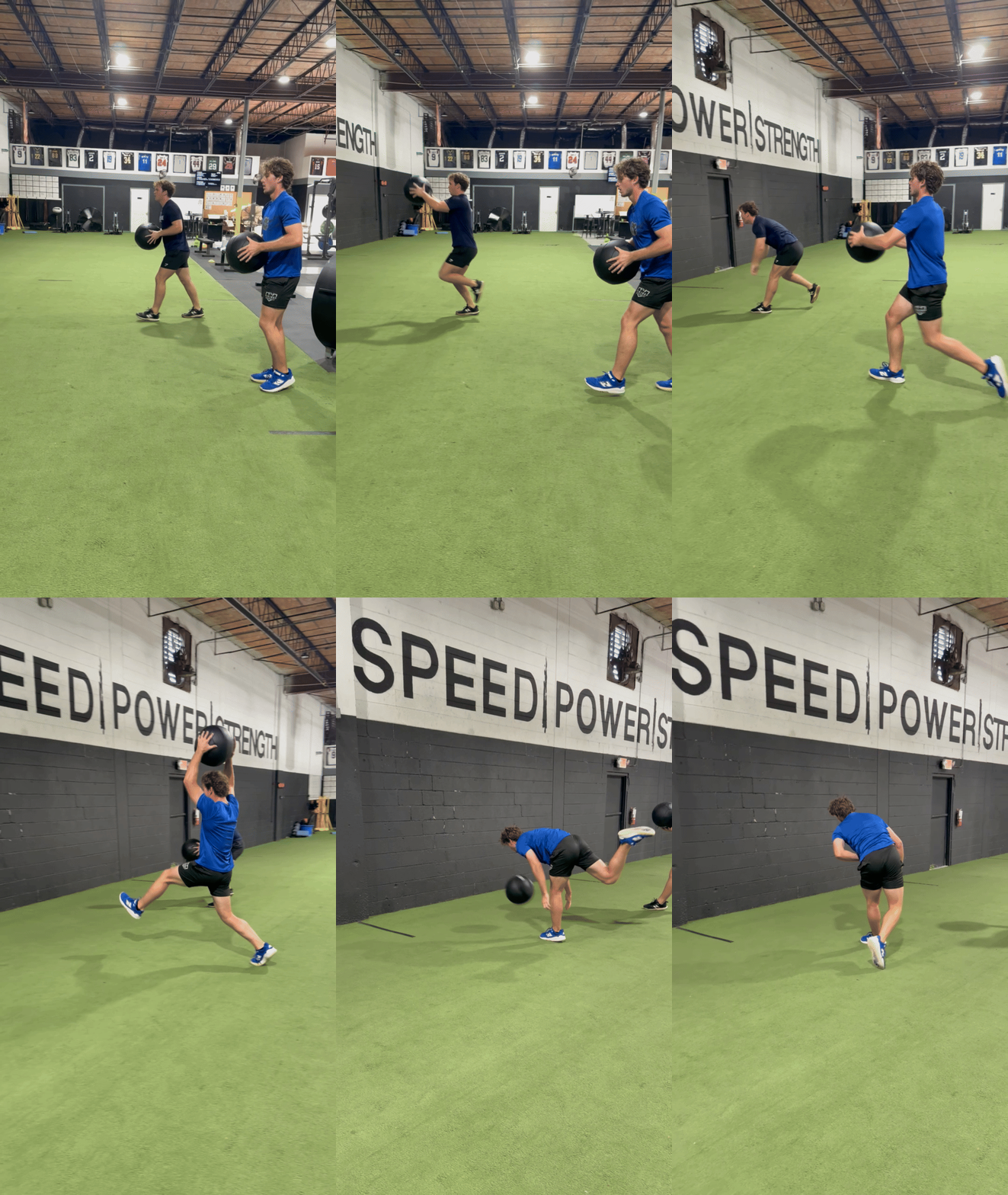

If max strength is the engine, then ballistic training is the transmission that turns that strength into sport-specific speed.
Ballistics are movements performed with max output, max intent, and max velocity—just like pitching or hitting.
This is where medicine balls become one of the most powerful tools for increasing baseball velocity.
Why Ballistics Work
Med ball throws:
- Build rotational power
- Train sequencing and timing
- Improve hip-shoulder separation
- Teach the body to rapidly transfer energy
- Develop explosive torso rotation
They directly mimic the demands of hitting and throwing, making them one of the closest training methods to actual game power.
Best Med Ball Drills for Baseball Velocity
- Rotational scoop toss
- Shot-put style med ball throw
- Step-behind rotational throw
- Med ball slam variations
- Kneeling rotational throws
These are staples in high-level offseason baseball velocity development programs.
Plyometrics: Developing Elite Rate of Force Production

Plyometrics build explosiveness by improving your rate of force production and reactive strength—two critical components of both pitching velocity and swing speed.
Think of plyos as sharpening the explosiveness created through strength and ballistic training.
Why Plyometrics Are Essential
Plyometrics improve:
- Elasticity
- Reactive strength index (RSI)
- Ground contact efficiency
- Lower body stiffness
- Ability to create rapid force with little time
Pitchers and hitters both benefit from quicker ground reaction forces, better stride speed, and faster hip rotation.
Key Plyometric Drills for Baseball Velocity
- Box jumps
- Broad jumps
- Lateral bounds and jumps
- Single-leg hops
- Hurdle hops
- Sprint variations
- Depth jump variations
When paired with strength and ballistic training, plyos help convert raw strength into on-field explosive performance.
Core & Trunk Strength: The Missing Link in Baseball Velocity
Most baseball athletes think “core work” is just planks and sit-ups. But developing elite baseball velocity requires a different approach.
Baseball is a rotational sport. That means your core needs to:
- Stabilize the spine during extreme rotational speeds
- Transfer energy from the lower body to the upper body
- Prevent power leaks
- Provide rotational torque
- Maintain posture through high-speed movements
Types of Core Training Baseball Players Need
- Anti-Rotation Work – to prevent energy leaks
- Anti-Lateral Flexion Work – for stability during the stride
- Anti-Extension Work – to protect the spine under rotational load
- Rotational Strength Work – controlled, powerful rotation for hitting and throwing
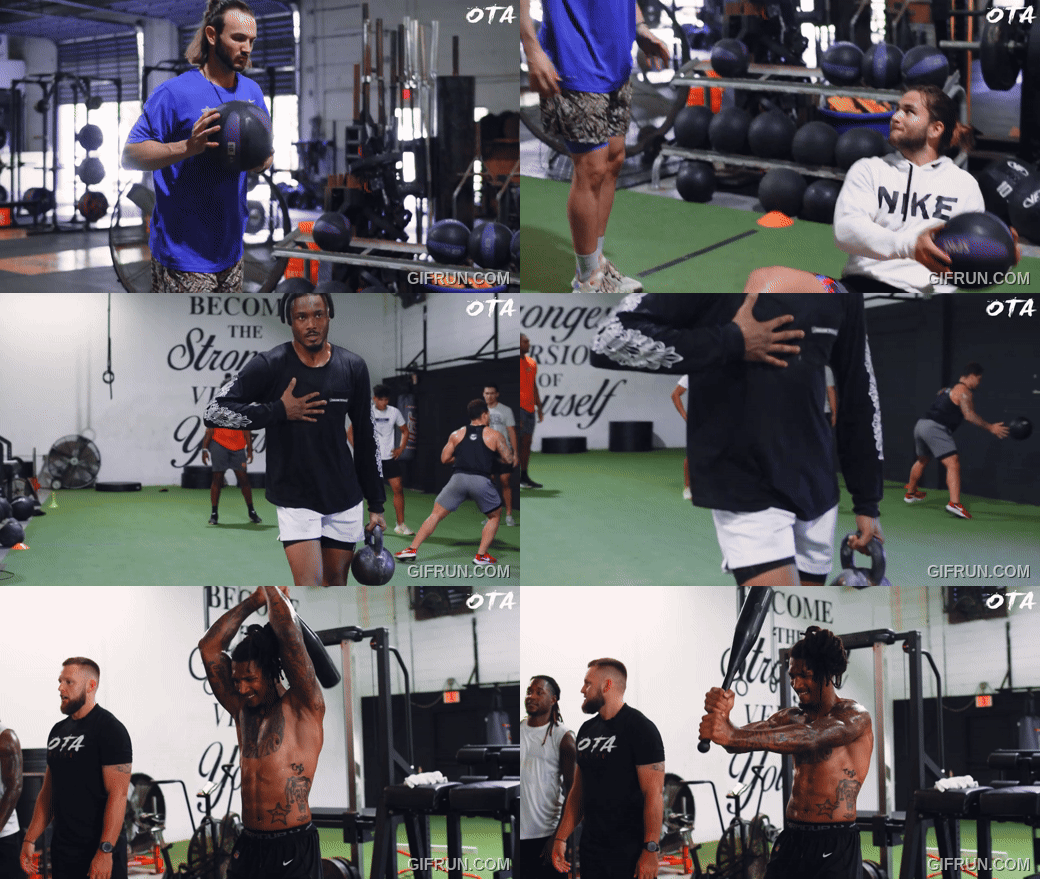

Exercises like Paloff presses, cable chops, carries, rotational lifts, and oblique-focused movements all help maximize trunk stability and rotational output. Check out our previous article on exercises to build rotational power.
When your trunk is strong, your velocity skyrockets because energy transfers more efficiently through your entire kinetic chain.
Bringing All the Methods Together
It’s not enough to only do med ball work. It’s not enough to lift heavy or just stretch your hips.
If you want elite baseball velocity, you need to combine all five pillars:
- Mobility unlocks your range of motion and sets your mechanics free.
- Max strength gives you the horsepower to generate massive force.
- Ballistics teach you to apply that force explosively and rotationally.
- Plyometrics make you more reactive and dynamic.
- Core & trunk strength ensure every ounce of force transfers cleanly into the ball or the bat.
This is the exact formula used by elite development programs and pro baseball strength coaches worldwide—and it’s the formula we’ve used to transform baseball athletes year after year at Overtime Athletes.
Conclusion
Improving baseball velocity isn’t about gimmicks or complicated drills. It’s about developing your body into a more explosive, powerful, and efficient rotational athlete.
If you build mobility, strength, explosiveness, reactive power, and rotational trunk stability, you create the perfect foundation for elite-level swing speed and pitching velocity.
These methods work. They’ve worked for thousands of baseball athletes, from youth prospects to professionals. And if you commit to them with intent and intensity, they’ll work for you too.