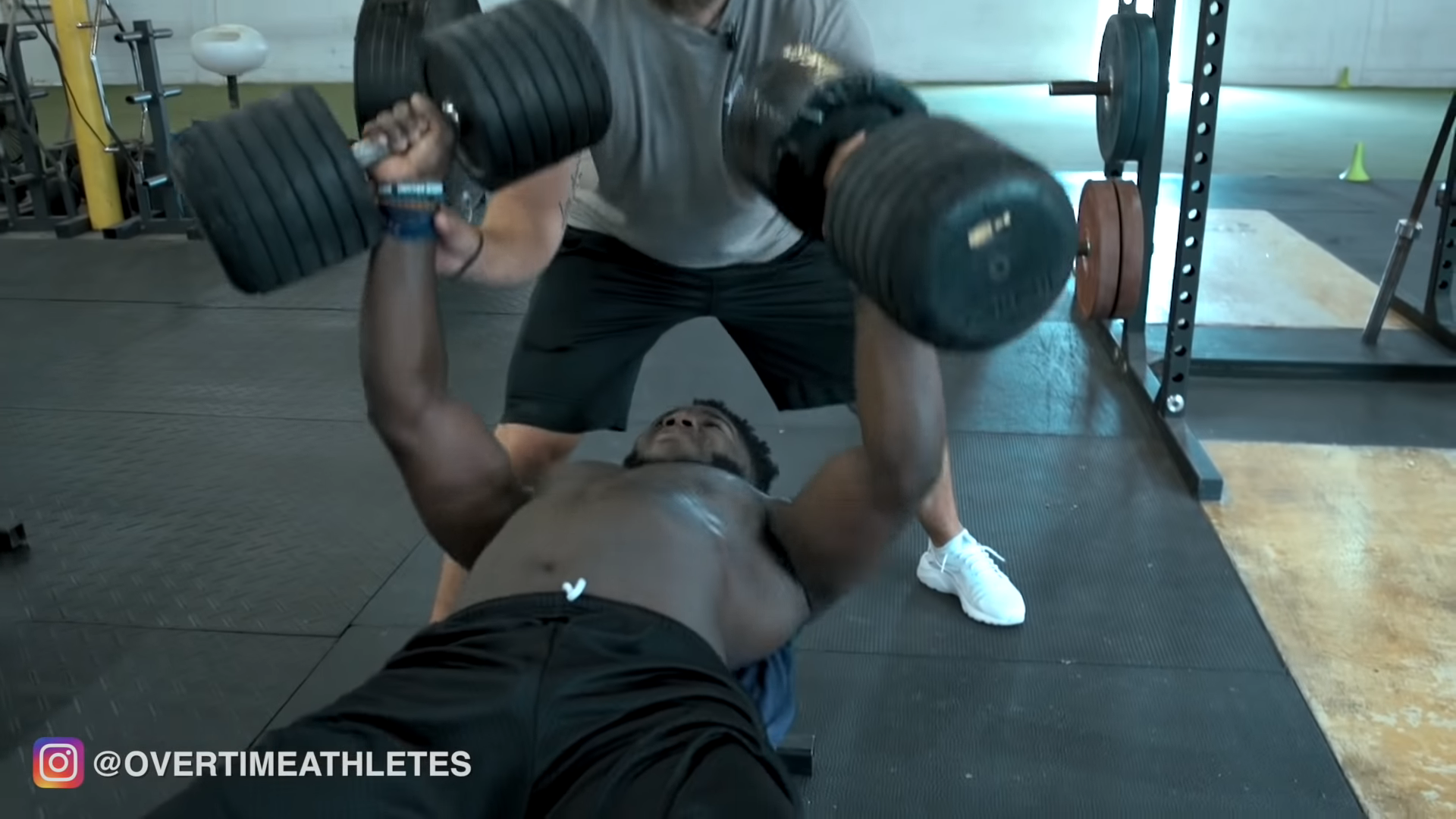

Upper Body Strength Training for Athletes: 5 of the Best Movements to Build Serious Strength
When most athletes think about performance, lower body power usually gets all the attention. Vertical jump, sprint speed, change of direction—those are driven heavily by the hips and legs.
But in reality, upper body strength training plays a much bigger role in athletic performance than most people realize.
Upper body strength isn’t just about looking strong or moving weight in the gym—it’s about your ability to control contact, stabilize under force, generate power through the arms and torso, and maintain positioning in chaotic, high-speed environments.
Think about it:
- A football player shedding a block or delivering a strike
- Basketball player fighting through contact to finish
- Baseball player transferring force through the upper body during a swing or throw
- Combat sport athlete throwing strikes and controlling grips, frames, and angles
In all of these situations, the upper body is not just assisting, it’s actively producing and transmitting force.
That’s why upper body strength is a critical piece of the performance puzzle.
Now, most athletes immediately default to the bench press when they think about upper body strength. And while the bench press is a staple, it’s often overemphasized as the primary movement. Some athletes need or want other variations to train upper body, and it’s good for coaches to have modifications in their bag.
The reality is that relying too heavily on one pattern limits development. Athletes need strength in multiple planes, from different positions, and under varying stability demands. That’s where more complete upper body strength training comes into play.
So instead of building your upper body strength with just one lift, we want to give you 5 of the best movements that can be loaded heavy, progressed over time, and used to build serious, transferable strength.
These include 3 pushing movements and 2 pulling movements, creating a balanced approach that supports both performance and durability. Be sure to also check out our article on how to program upper body training for athletes!
Here are 5 of the best upper body strength movements to include in any athletes programming:
1. Floor Press
The floor press is a foundational movement for building pressing strength without relying on excessive range of motion or momentum.
It’s especially valuable for athletes because it emphasizes strength where it matters most—producing force from a controlled, stable position.
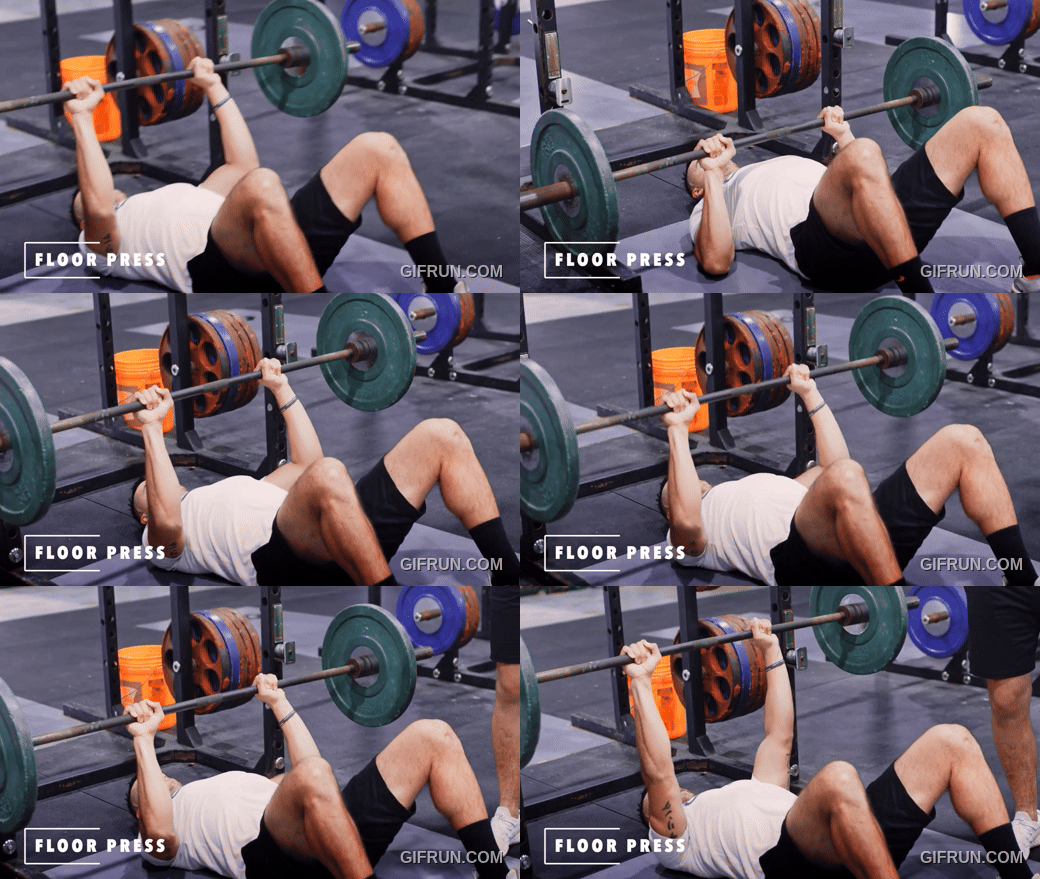
How to Perform:
- Lie flat on the floor with a barbell or dumbbells
- Keep knees bent and feet flat
- Lower the weight until your elbows contact the floor
- Press explosively back to lockout
Benefits:
- Builds starting strength and explosive pressing power
- Reduces unnecessary shoulder stress compared to full-range pressing
- Emphasizes triceps strength for stronger lockouts
Reinforces control and force production from a limited ROM
2. Z Press
The Z press is one of the most demanding overhead pressing variations in upper body strength training. It removes all lower body assistance and forces the athlete to rely entirely on upper body strength and core stability.

How to Perform:
- Sit on the floor with legs fully extended
- Hold a barbell or dumbbells at shoulder level
- Keep the torso upright and core braced
- Press the weight overhead without leaning back
- Lower under control to the starting position
Benefits:
- Develops strict overhead pressing strength
- Forces strong core engagement and posture under load
- Eliminates leg drive, exposing true upper body limitations
- Improves shoulder stability and overhead control
3. Single Arm Dumbbell Bench Press
This unilateral pressing movement is a powerful tool for correcting imbalances and improving stability. Unlike traditional bilateral pressing, this variation forces the athlete to resist rotation while producing force. We like doing these especially with sports like baseball.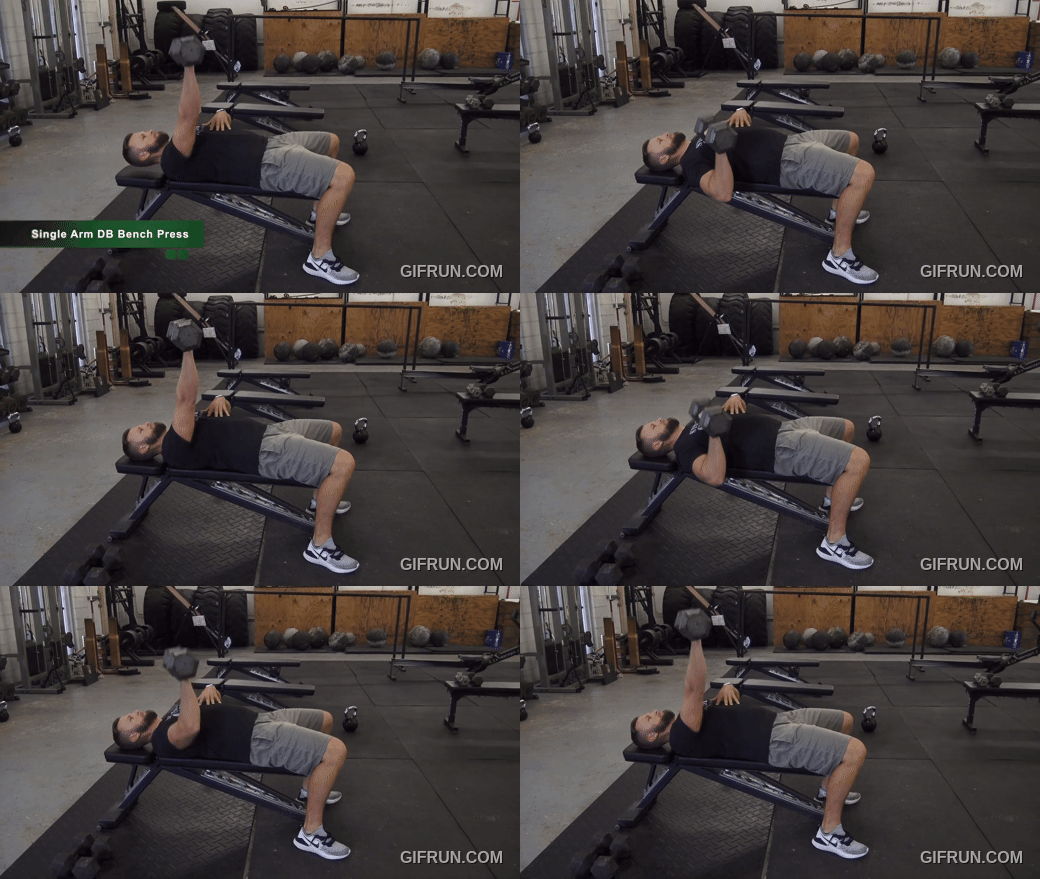
How to Perform:
- Lie on a bench holding one dumbbell
- Keep feet planted and core tight
- Lower the dumbbell under control to the chest
- Press it back up while maintaining a stable torso
- Avoid rotating or shifting side to side
Benefits:
- Builds unilateral upper body strength
- Improves core stability and anti-rotation control
- Helps identify and correct strength imbalances
- Transfers well to sport-specific movements that are asymmetrical in nature
4. Weighted Neutral Grip Chin-Ups
Pulling strength is just as important as pushing strength in a complete upper body strength training program. Weighted chin-ups are one of the most effective ways to build that strength, especially when performed with a neutral grip. A balanced athletic strength program will have athletes performing heavy pulls as well their pushes.
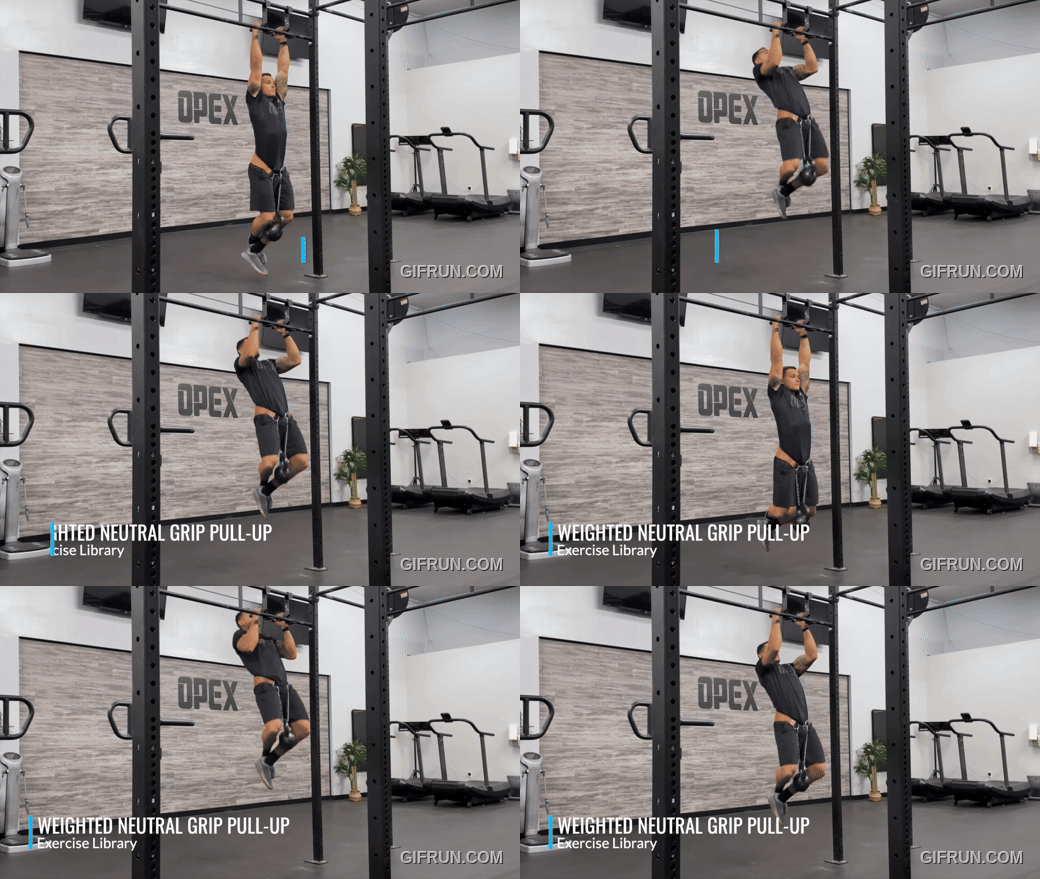
How to Perform:
- Grip neutral handles (palms facing each other)
- Add external load using a belt or dumbbell
- Start from a full dead hang
- Pull your chest toward the bar
- Lower under control to a full stretch
Benefits:
- Builds upper back, lat, and arm strength
- Enhances grip strength and control
- Supports shoulder health by balancing pressing volume
- Carries over to grappling, sprinting mechanics, and overall athletic control
5. Pendlay Row
The Pendlay row is a strict, explosive horizontal rowing variation that starts from the ground each rep. This removes momentum and forces the athlete to generate force from a dead stop, making it an excellent movement for developing real pulling strength. Generating force by including the legs in this allows the athlete to overload and really push the weight on this movement.
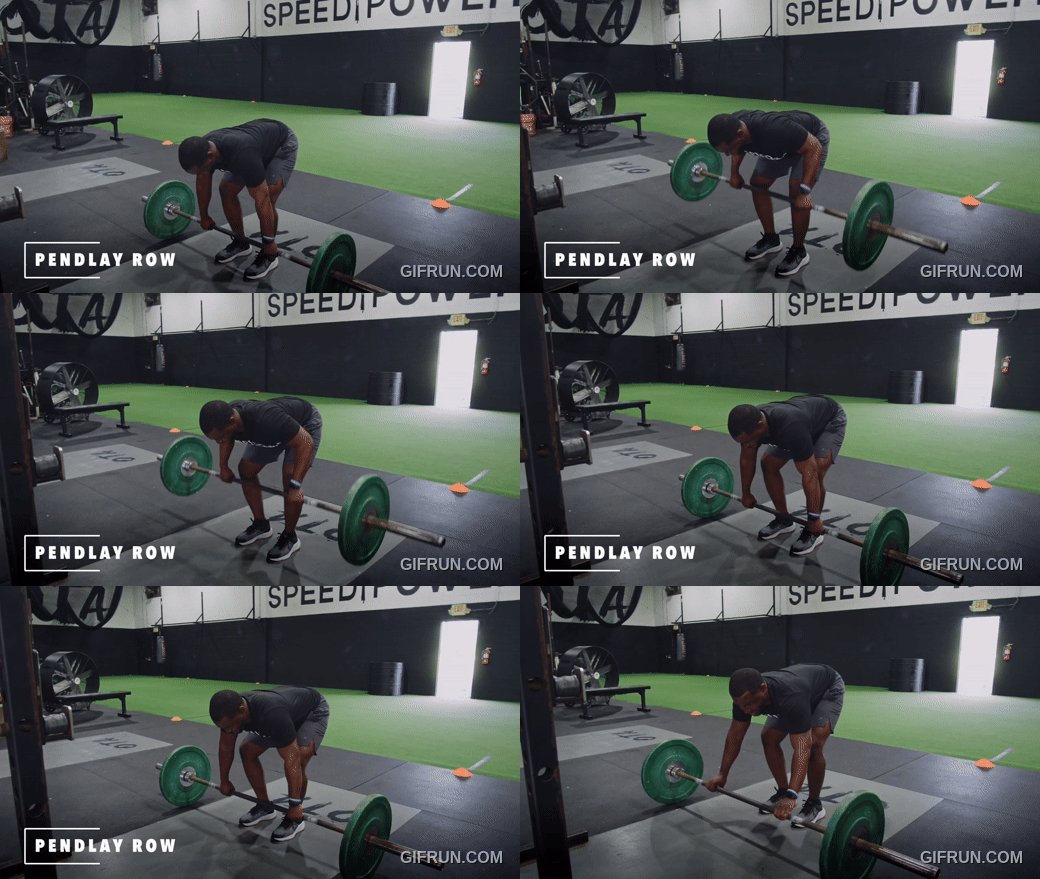
How to Perform:
- Set a barbell on the floor
- Hinge at the hips with a flat back and neutral spine
- Grip the bar with an overhand grip
- Pull explosively to the torso
- Return the bar to the floor and reset each rep
Benefits:
- Builds explosive upper back strength
- Reinforces proper posture and hinge mechanics
- Improves pulling power that transfers to athletic movements
Final Thoughts
Upper body strength training is not optional for athletes. It’s every bit as important for athletes performance as building a strong and powerful lower body.
A well-developed upper body allows you to:
- Absorb and redirect force efficiently
- Maintain control during contact
- Produce force through the arms and torso
While the bench press is often the default choice, a more complete upper body strength training approach includes multiple movement patterns, angles, and stability demands.
These 5 movements give you exactly that.
They allow athletes to load heavy, train with intent, and develop strength that actually carries over to competition—not just the weight room.
Ready to Train Like an Athlete?
If you’re serious about building real strength, improving performance, and training with purpose, check out our programs here.
We don’t just build lifters, we build serious athletes who are stronger where it matters most. Start with Athletic Mass if you’re trying to build serious muscle and strength!