
5 Best Plyometric Exercises for Vertical Jump to Jump Higher Faster
At Overtime Athletes, we believe vertical power is king.
If you can produce force fast, absorb force efficiently, and redirect it explosively, you’re going to be a better athlete — period. That’s why plyometric exercises for vertical jump development are a cornerstone of how we train athletes across every sport.
Football. Basketball. Baseball. Soccer. Lacrosse. Volleyball. Track.
Regardless of position or sport, the athletes who jump higher, move faster, and express power efficiently tend to dominate. The vertical jump isn’t just a test — it’s a global performance metric that reflects how well an athlete can use their body.
In this article, we’re breaking down:
- Why vertical power matters for all athletes
- What vertical jump performance actually transfers to on the field and court
- And the 5 best plyometric exercises for vertical jump that we use at OTA to help athletes jump higher faster
Make sure to check out our previous article on the 3 Metrics for Elite Vertical Power!
Why Overtime Athletes Prioritizes Vertical Power
Vertical power is one of the cleanest expressions of total athletic ability.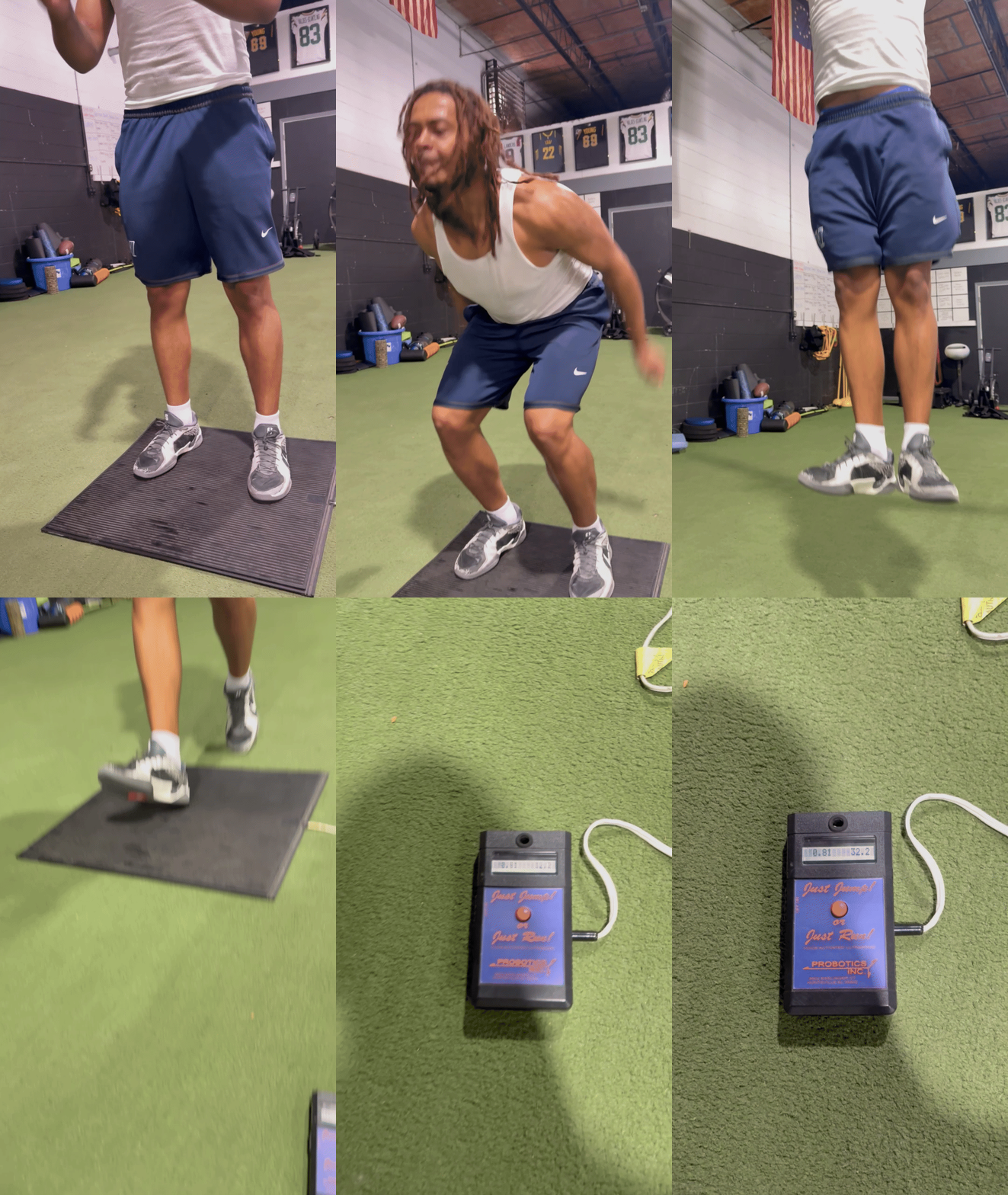
A high vertical jump requires:
- Max force production
- Explosive rate of force development
- Efficient coordination of hips, knees, and ankles
- Proper force absorption and re-direction
- Elastic energy utilization
That combination makes the vertical jump a powerful indicator of how well an athlete can apply strength at game speed.
We constantly test and train vertical jump ability because improvements in vertical power tend to carry over to nearly every athletic action.
What Vertical Jump Power Transfers To
When we improve vertical jump performance using the right plyometric exercises, we consistently see improvements in:
- Acceleration and first-step quickness
- Top-end sprint speed
- Change of direction and cutting ability
- Deceleration and braking control
- Jumping, rebounding, and contested play
- Overall explosiveness and on-field confidence
That’s why vertical jump training isn’t just for basketball or volleyball athletes. It’s for any athlete who needs to move explosively, which is essentially all of them.
Now let’s get into the best plyometric exercises for vertical jump development, as used inside our OTA systems.
1. Trap Bar Jumps
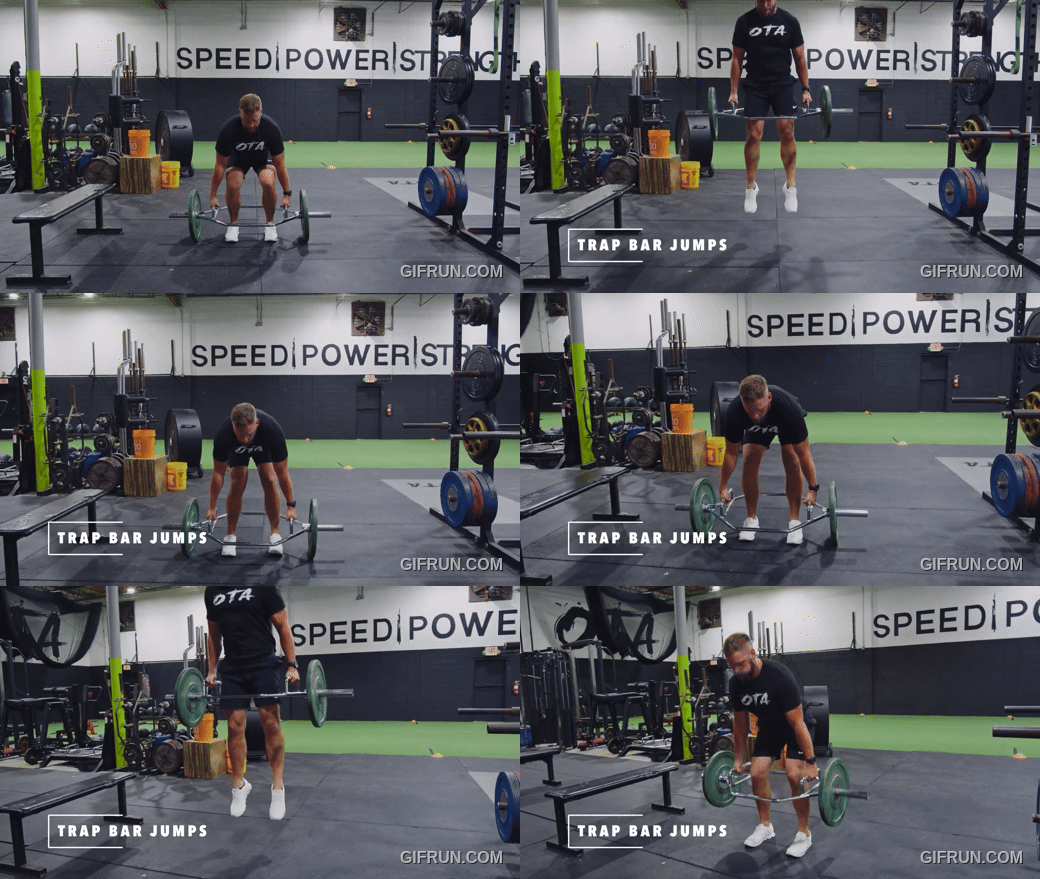
Trap bar jumps are one of the most effective ways to bridge the gap between strength and explosiveness.
Unlike traditional plyometrics, trap bar jumps allow athletes to load the movement while still moving at high velocity. This makes them ideal for athletes who already have a strength base and need to convert that strength into usable power.
Why we use them at OTA:
- Reinforces aggressive triple extension
- Allows for progressive overload without killing speed
- Improves force output in a vertical vector
- Safer and more controllable than barbell jumps
How to perform:
Start in an athletic stance inside the trap bar. Load the hips back slightly, maintain a neutral spine, and explode vertically as fast as possible. Focus on speed, not grinding reps. Every rep should look crisp and violent.
Trap bar jumps are especially effective early in a session when the nervous system is fresh.
2. Rebound Box Jumps
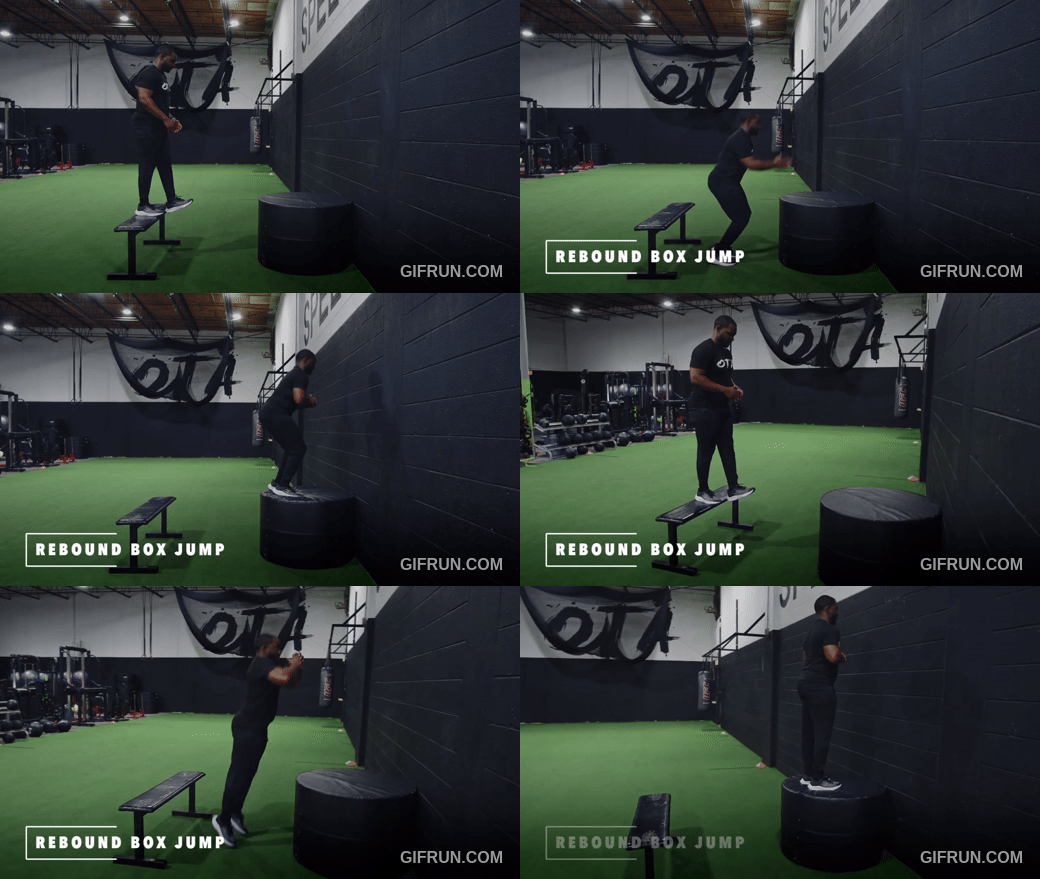 Rebound box jumps are a staple plyometric exercise for vertical jump that develops reactive strength and elastic power.
Unlike traditional box jumps that emphasize landing softly, rebound box jumps train the ability to absorb force and immediately re-apply it, which is critical for sprinting, cutting, and jumping in sport.
Why they matter:
- Improves stretch-shortening cycle efficiency
- Develops stiffness in the ankles and lower leg
- Enhances rapid force re-direction
- Transfers well to repeated explosive efforts in games
How to perform:
Start on the ground or a low box. Drop down, hit the ground quickly, and immediately rebound onto the box with minimal ground contact time. The goal is not height alone — it’s speed into height.
If ground contact gets slow, the set is over.
3. Depth Drop to Underhand Med Ball Vertical Toss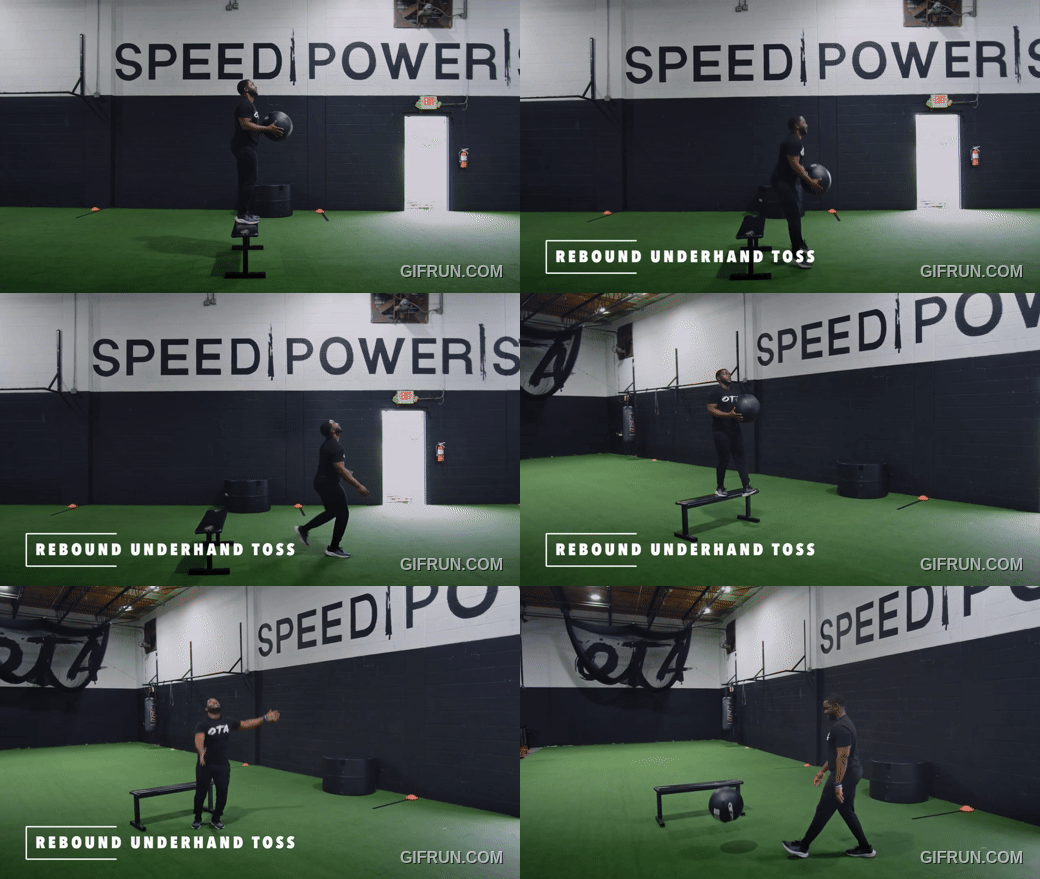

This is one of our favorite advanced plyometric combinations for vertical jump development.
It trains the athlete to absorb force, reverse it, and explode upward through the entire kinetic chain — from feet to hands. This ballistic exercise overloads the eccentric in the drop before exploding concentrically all the way through the toss.
Why this drill is elite:
- Teaches force absorption under control
- Reinforces vertical intent
- Integrates upper and lower body explosiveness
- Builds coordination at high speed
How to perform:
Step off a box, land softly but firmly, and immediately perform an underhand vertical medicine ball toss as high as possible. The timing between landing and exploding upward should be controlled, but as fast as possible.
This drill is especially valuable for athletes who struggle to translate lower-body power into full-body explosiveness.
4. Band Accelerated Squat Jumps
Band-accelerated squat jumps are one of the best ways to train overspeed intent in vertical jump training.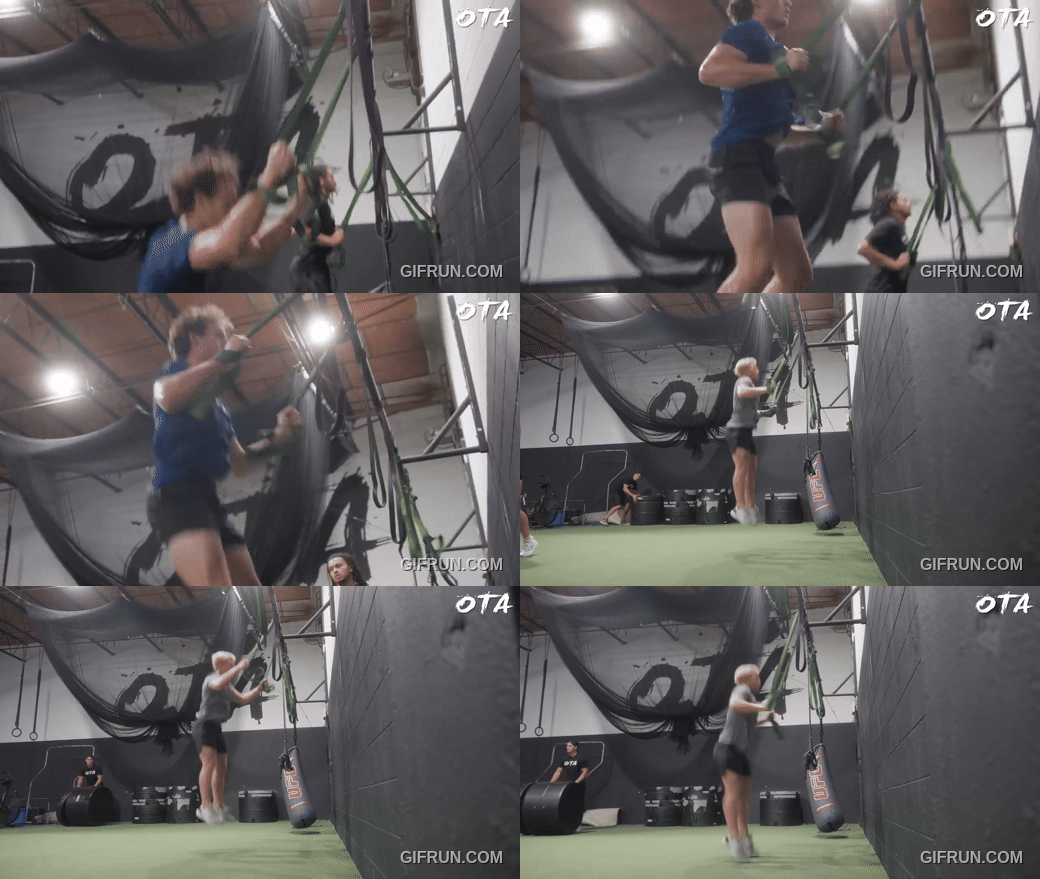
The bands help pull the athlete upward faster off the ground and against gravity, allowing them to drive off the ground aggressively and with more speed and velocity into each jump.
Why OTA uses them:
- Much faster eccentric/concentric muscle action
- Improves reactive strength
- Enhances rate of force development
- Teaches athletes to move fast, not just strong
How to perform:
Attach bands from above, looped around the shoulders or waist. Drop into a squat under band tension and immediately explode upward as hard and fast as possible. Focus on violent intent off the floor.
These are not conditioning jumps — quality and intent come first.
5. Bulgarian Split Squat Jumps
Most sport actions happen off one leg, not two. That’s why unilateral plyometrics are non-negotiable in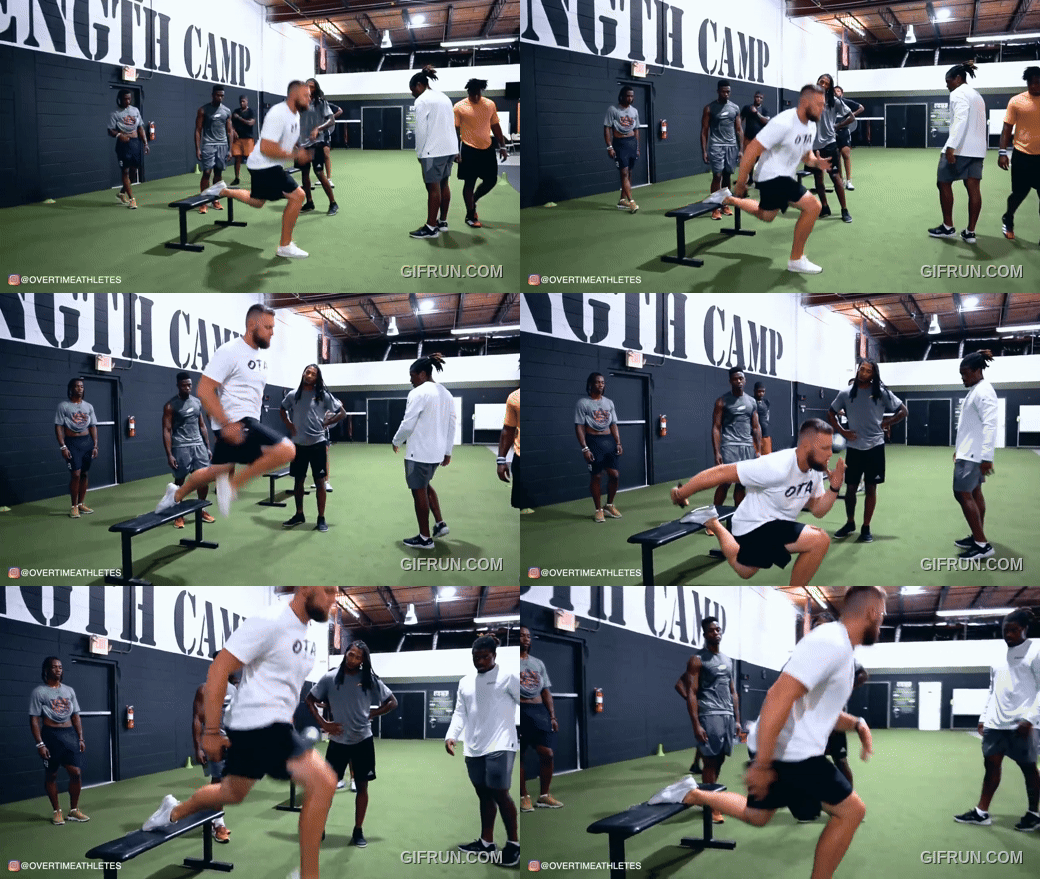 vertical jump development.
Bulgarian split squat jumps build single-leg power, stability, and force expression while exposing asymmetries that bilateral movements can hide.
Why they’re essential:
- Improves unilateral force production
- Enhances hip stability and control
- Transfers to sprinting and cutting
- Reduces power leaks between legs
How to perform:
Set up in a Bulgarian split stance with the rear foot elevated. Drop into the split squat and explode upward, switching legs between sets. Stay tall, powerful, and controlled on landing.
These are brutal, but incredibly effective.
How OTA Programs Plyometric Exercises for Vertical Jump
At Overtime Athletes, we don’t throw plyometrics into workouts randomly.
Every drill has a purpose, and every progression is based on:
- Training age
- Strength levels
- Movement quality
- Sport demands
- Current vertical jump ability
The goal is not to do more jumps — it’s to do the right jumps, at the right time, with the right intent.
Final Thoughts: Vertical Power Changes Everything
If there’s one metric we care about improving with nearly every athlete, it’s vertical jump performance.
Vertical power is a reflection of:
- Strength
- Speed
- Coordination
- Elasticity
- Athletic readiness
When an athlete’s vertical jump goes up, performance almost always follows.
If you’re serious about jumping higher faster — and becoming a more explosive, dominant athlete — you need more than random plyometrics. You need a system.
👉 That’s exactly what we build inside the Overtime Athletes Elite Vertical Academy.
Our program helps athletes to:
- Develop real vertical power
- Apply it to sport
- And keep building explosiveness long-term
If you’re ready to take your vertical — and your performance — to the next level, Elite Vertical Academy is where it starts.
