
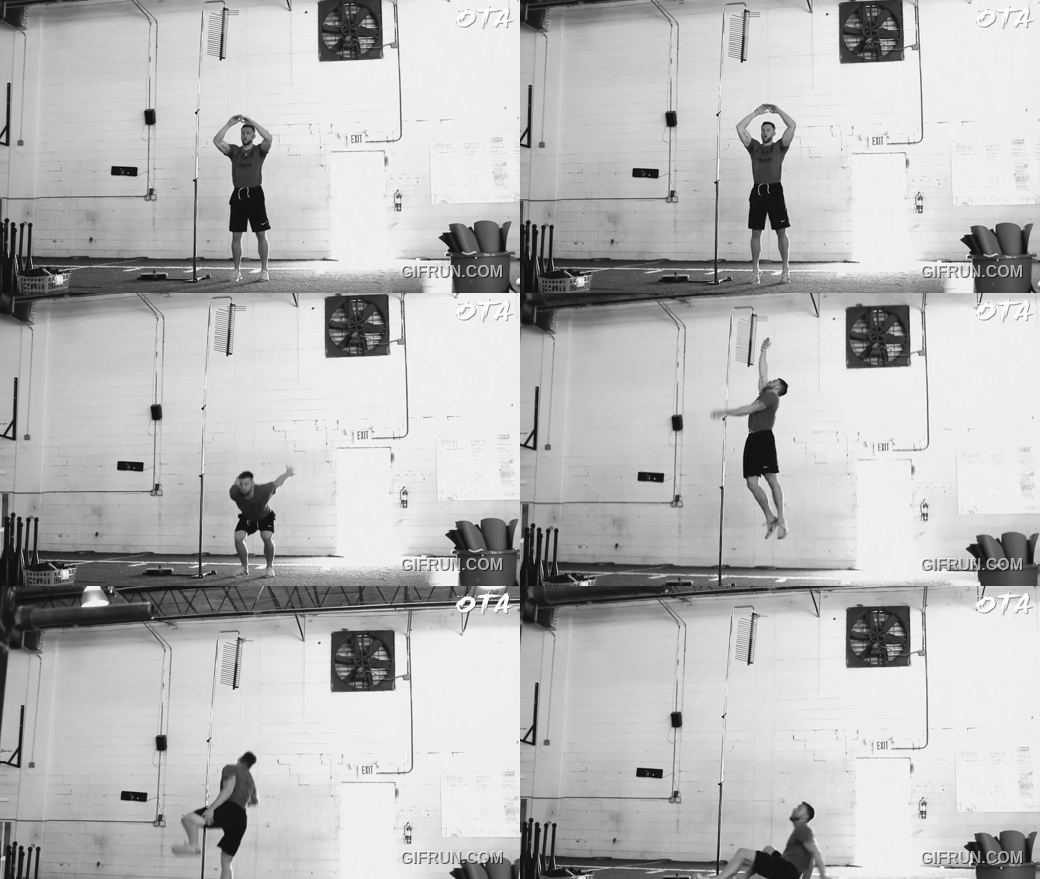
How to Increase Your Vertical Jump and 3 Key Metrics
To increase your vertical jump, you have to train like a real athlete—not like a bodybuilder, not like a general fitness lifter, and definitely not like someone who just does random plyos they found on TikTok. When we program for basketball players, football players, baseball guys, or anyone trying to build elite explosive power, everything comes back to one thing:
Vertical force production.
Athletes who can produce more force straight into the ground—and do it faster—jump higher. Period. That vertical force also carries over to almost every other athletic quality you care about: speed, acceleration, change of direction, throwing power, rotational force, and even injury resilience.
In this article, I’m going to break down exactly how we train athletes at OTA to increase vertical jump performance. We’ll go over the three metrics we use to evaluate explosive potential, how we train each one, and how they come together to create freak athletes. See our previous article that dives into how we use modified triphasic training to help our athletes vertical explode!
This is the exact system we’ve used for years to help athletes jump higher, move smoother, and dominate their sport.
Let’s get into it.
Why Vertical Force Matters for Every Athlete
Before we get into the specifics of how to increase your vertical jump, you need to understand one principle:
What you do vertically carries over horizontally.
If you improve the force you produce straight down into the ground, here’s what happens:
- Your sprint acceleration gets better
- Stride power improves
- Better projection angles when you sprint
- You can change direction with more authority
- Develop more hip extension power, which is used in almost every explosive movement
- Landing mechanics improve, decreasing risk of injury
- Tendons become stiffer, allowing you to transfer force more efficiently
So yeah—improving your vertical jump isn’t just about getting a highlight dunk or looking cool. It literally builds the foundation for all athletic performance.
At OTA, we use three key metrics to evaluate whether an athlete has the vertical force profile required to jump high:
- Max Trap Bar Deadlift (Strength Capacity)
- Raw Vertical Force Output (Explosive Power)
- Reactive Strength Index – RSI (Elasticity & Rate of Force Development)
Every elite jumper has all three.
Every average jumper is missing one.
Let’s break them down.
1. Max Trap Bar Deadlift (2–2.5x Bodyweight)
Why We Use It
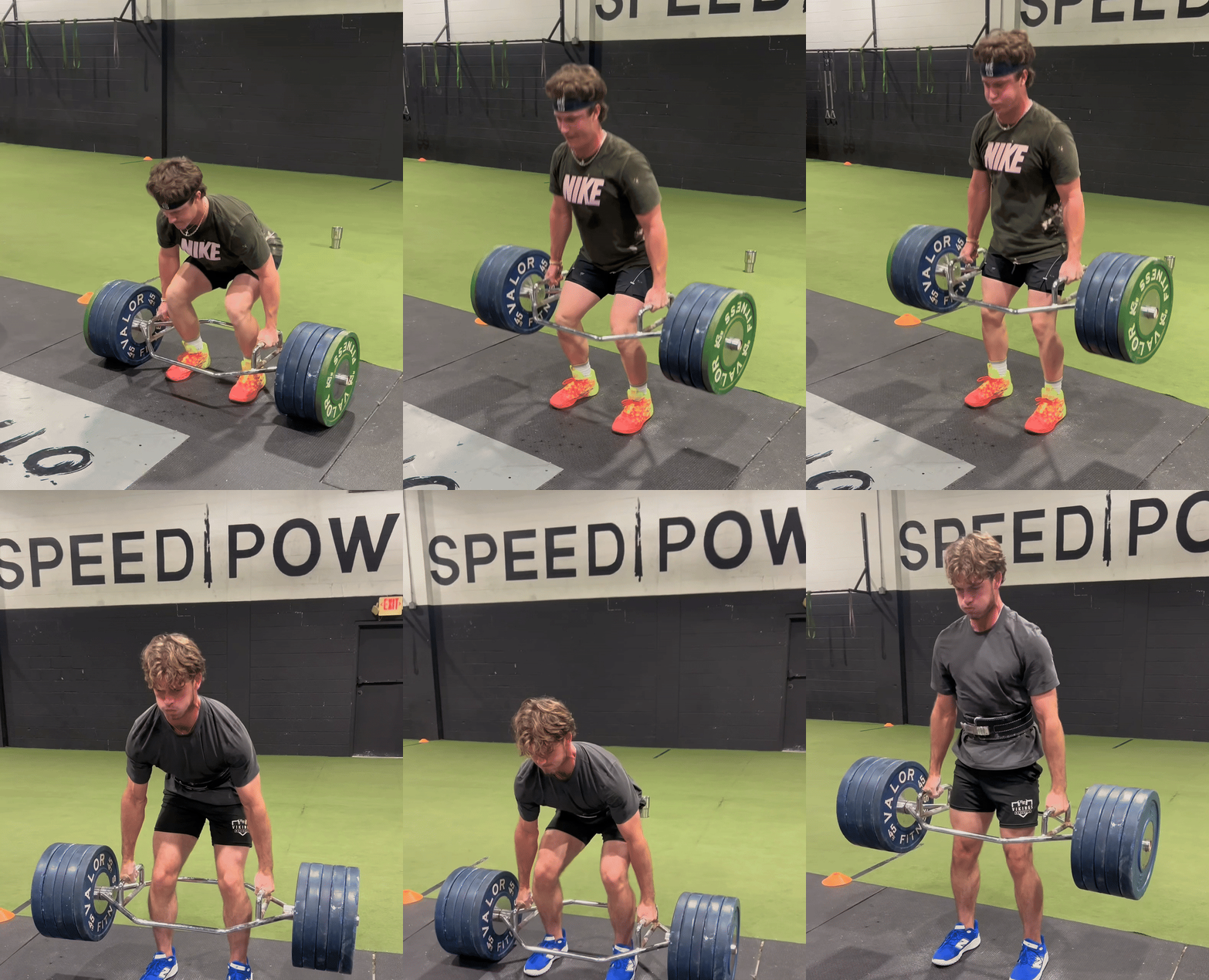
Max trap bar deadlift is one of the best indicators of whether an athlete has the strength base required to produce large amounts of vertical force.
When you pull a trap bar loaded to at least 2x your bodyweight, you’re demonstrating:
- Strong hip extensors
- Strong quads
- Strong posterior chain
- The ability to apply high force straight down into the ground
Strength capacity is the foundation of jumping. Often, when a parent or athlete thinks the problem is more technique or mechanics, when really they are simply too weak and can’t even produce the necessary amount of force.
Our Standard:
Every athlete should trap bar deadlift 2x bodyweight at minimum.
Elite power athletes should hit 2.2x–2.5x.
This doesn’t mean you need to deadlift like a competitive powerlifter. Simply, if you can’t produce enough raw force, you can’t expect to jump high.
How We Train It
We typically program:
- Heavy trap bar deadlifts
- Stiff-leg or RDL variations
- Heavy split squats or rear-foot elevated work
- Iso-holds to build tendon stiffness
- Wave loading strength cycles
The goal is simple:
Build maximal force production capability through the lower body.
Once that foundation is strong enough, we shift into converting that strength into vertical power.
2. Raw Vertical Force (Max Effort Vertical Output)
What This Means

This is where athletes start to feel their explosiveness come alive. Raw vertical force refers to how much force you can produce in a single explosive effort—no stretch cycle, no repeated bouncing, no elastic advantage.
Just force.
Just pop.
At OTA, we get athletes producing vertical force as often as possible during the week (without exceeding fatigue thresholds).
How We Train Raw Vertical Force
Here are some examples we regular program:
Max Box Jumps
Max effort vertical projection.
We cue:
- Hip extension
- Vertical shin angle
- Explosive takeoff mechanics
- Soft landing
This is about power, not landing on the highest possible box.
Max Hurdle Jumps
Simple:
Clear the highest hurdle possible with soft landings and perfect mechanics.
This teaches an athlete to apply high vertical force rapidly.
Max Vertical Jumps
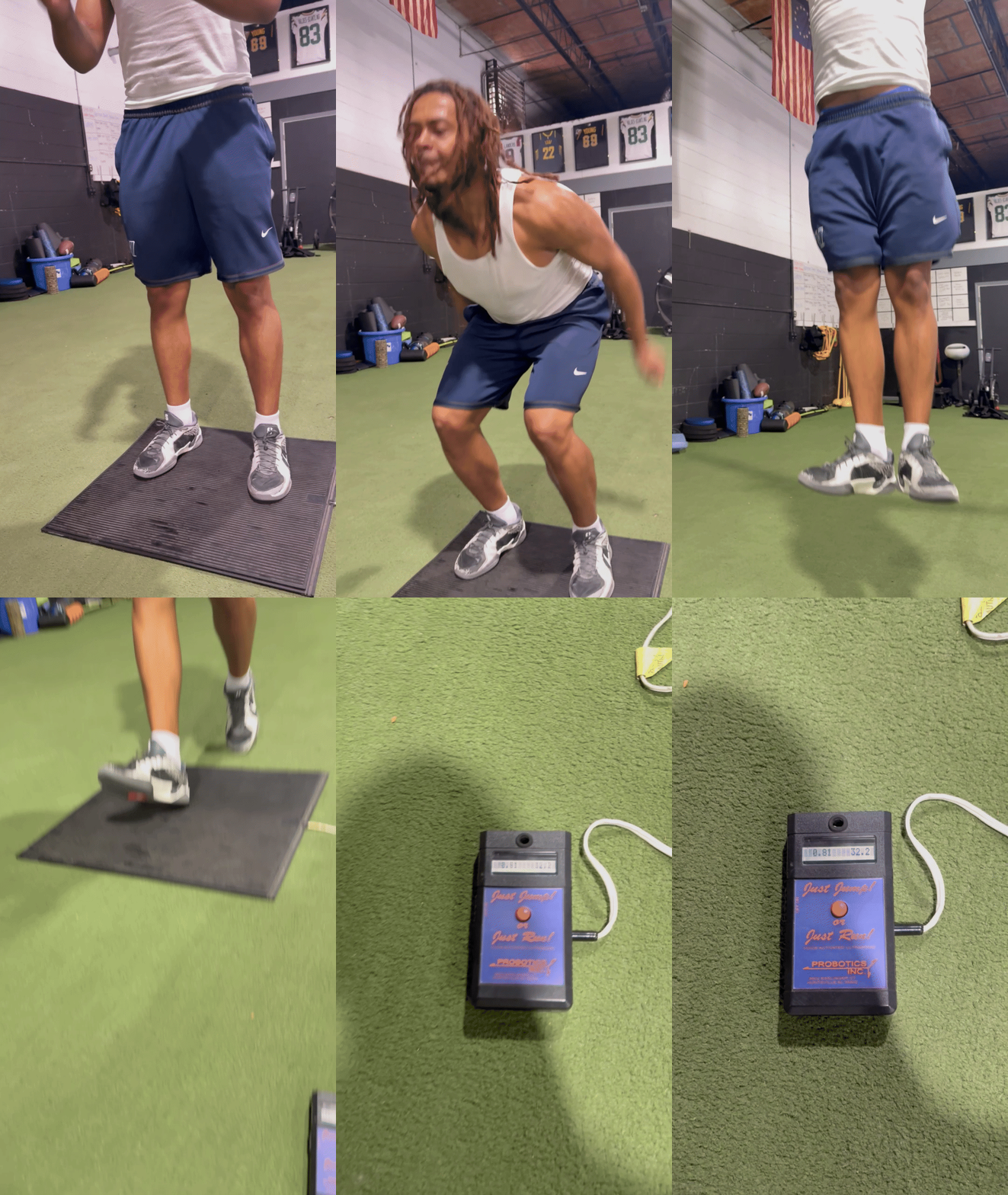
We use Vertec, force plates, Just Jump mats, or even wall touches—whatever we have available.
Every session includes some form of:
- Stationary vertical jumps
- Approach vertical jumps
- Single-leg vertical jumps
Be sure to maximize the intensity of each takeoff while keeping fatigue manageable.
Single-Leg Box Jumps
We use these to identify asymmetries and develop unilateral power, which is crucial for:
- Acceleration
- Cutting
- Single-leg takeoffs
- Landing stability
To increase your vertical jump, you need to train your legs independently.
Training Philosophy
Our goal with raw vertical force is simple:
Expose the athlete to maximal vertical outputs consistently to train the nervous system to fire harder and faster.
You can be strong, but if you never sprint, jump, or explode, you’ll never see that strength translate into athleticism.
3. Reactive Strength Index – RSI (Elasticity & Rapid Force)
What RSI Measures
RSI is the combination of:
- Fast ground contact times
- High force output
- Elastic recoil
- Tendon stiffness
- Reactive ability
Athletes with high RSI scores don’t just jump high—they jump high repeatedly with minimal slowdown.
This is the quality that separates good athletes from special ones.
Why RSI Matters for Vertical Jump
Think about dunkers or about receivers who jump multiple times in a single play.
Volleyball players exploding up for block after block.
They have rapid force production and elite elasticity.
Strength is the engine…
And raw vertical force is the horsepower…
RSI is the turbocharger.
How We Train RSI
These are our staples:
Multi-Hurdle Jumps

We set up 3–6 hurdles and focus on:
- Fast ground contact
- Minimal amortization
- Maintaining vertical pop across all hurdles
- Smooth rhythm and elastic transitions
This rapidly increases tendon stiffness and elasticity.
Depth Jumps / Drop Jumps
We step off a box—not jump—and explode off the ground as fast as possible.

Cue:
- Quick contact
- Rigid ankles
- Stiff tendons
- Strong posture
- Max vertical projection
The depth jump is one of the best exercises to increase RSI when programmed correctly.
Bounding
Horizontal elasticity.
Rhythmic force.
Single-leg stiffness.
Bounding carries over directly to:
- Acceleration
- Vertical pop
- Speed mechanics
- Sprint projection
It’s one of the most powerful RSI builders for field athletes.
Repeated Jumps
This includes pogo jumps, ankle hops, and repetitive vertical jumps.
We’re teaching the athlete to use elasticity, not muscle, to produce force rapidly.
How These 3 Metrics Combine to Increase Your Vertical Jump
An athlete that improves:
- Max trap bar deadlift → they increase maximum force
- Raw vertical force → they increase explosive output
- RSI → they increase elasticity and rapid force production
Transforms into an explosive athlete with elite vertical capability.
The best jumpers in the world aren’t good at just one of these.
They are great at all three.
To increase your vertical jump, you need all three systems firing together: strength, power, and elasticity. For more vertical exercises, check out this article by Coach Jordon on his top 3 exercises for increasing vertical power.
This is how you build real athletic explosiveness—not fake box jump PRs or ego-lifts with no speed.
Conclusion
To increase your vertical jump, stop guessing and start training like high-level athletes do. Build your strength foundation with a heavy trap bar deadlift—2x to 2.5x bodyweight should be every athlete’s goal. Develop raw vertical power by exposing your nervous system to max effort vertical outputs consistently. Build elite RSI using multi-hurdle jumps, depth drops, bounding, and fast reactive plyos to give your body the elasticity and rapid force production needed for next-level explosiveness.
Programming for these three metrics the way we do at Overtime Athletes will help you not only jump higher—but also sprint faster, cut harder, hit or throw with more power, and perform better in every aspect of your sport.
You want to become the most explosive version of yourself? This is the blueprint.
Let’s work.

