

7 Agility Training Drills to Get Faster Instantly
If you want to get faster on the field, you need to understand this first:
Most agility training doesn’t actually improve game speed.
Ladders, cones, and pre-set drills might make you look quick in a workout—but football isn’t predictable. It’s fast, chaotic, and reactive. You don’t get to plan your cuts ahead of time. You react to what’s in front of you.
That’s why true agility training isn’t just about moving fast—it’s about reacting fast under control.
The goal isn’t just drill speed. It’s game speed. And that requires a different approach. Please check out our previous article taking you inside a pro football agility session!
Why Agility Training Actually Matters
Agility training is more than just change of direction. It’s the ability to decelerate, redirect, and explode again based on what you see.
Think about football:
A running back doesn’t hit a pre-planned hole—he reads leverage and reacts. A DB doesn’t guess a route—he reacts to the receiver’s hips. A linebacker doesn’t move randomly—he flows, plants, and redirects based on the play.
Everything is reaction-based.
So if your agility training is completely pre-planned, you’re missing the most important part. You’re just getting really good at planned patterns and not integrating it into true agility training.
From Drills to Game Speed: The Progression That Works
There is a place for basic drills—but they’re just the starting point.
Agility training should progress like this:
- You build the foundation with controlled, repeatable movements
- Then you introduce variability
- Then you integrate it and train true reaction under speed
Most athletes get stuck at step one. They get really good at drills… but it never shows up in games.
The difference is simple: football is reactive, so your training has to become reactive too. You have to find ways to incorporate a reactive component into the drills you do to really see it transform into true agility.
7 Agility Training Drills That Actually Transfer
1. Lateral Line Hops
This is your foundation. It’s simple, but it matters.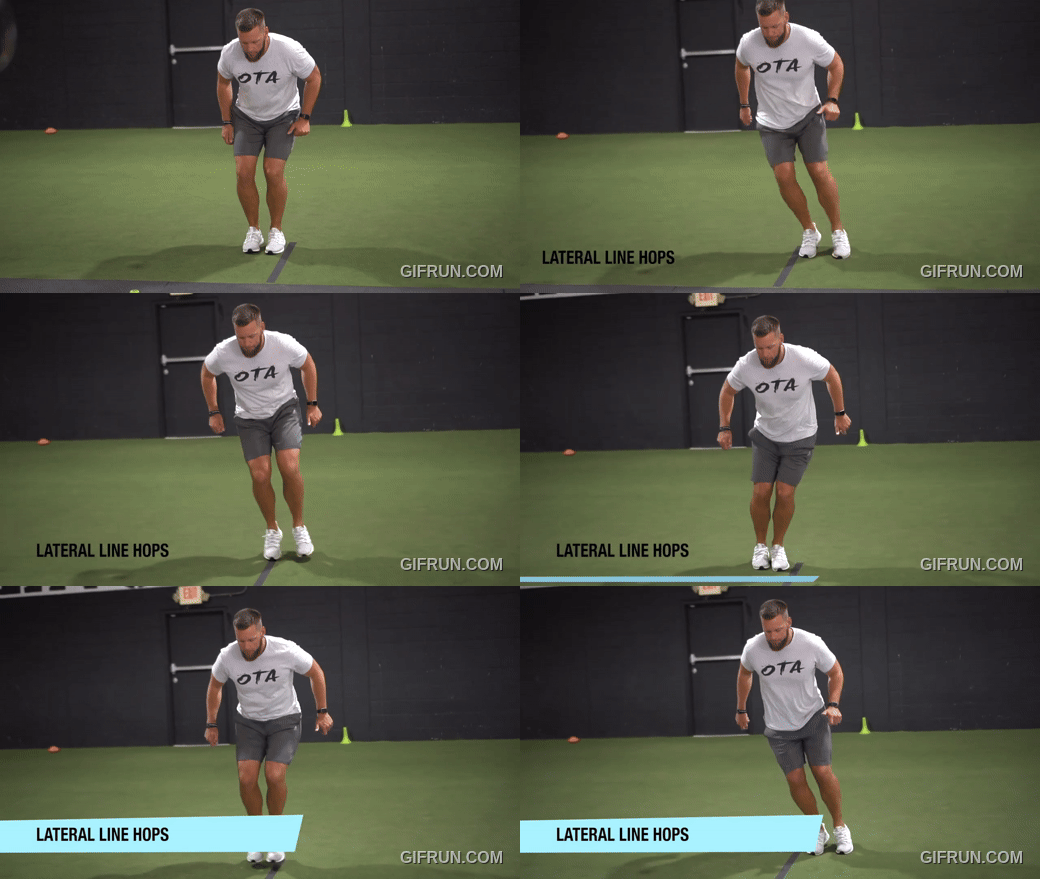
Lateral line hops build the base for quickness—specifically how fast you can get off the ground and move side to side. It develops ankle stiffness, rhythm, and coordination.
The key here is not jumping high. It’s staying quick and efficient. Fast contacts, controlled movement.
If you can’t be quick at a low level, you won’t be quick when the intensity increases.
2. Reactive Skater Hops
Now we start introducing reaction.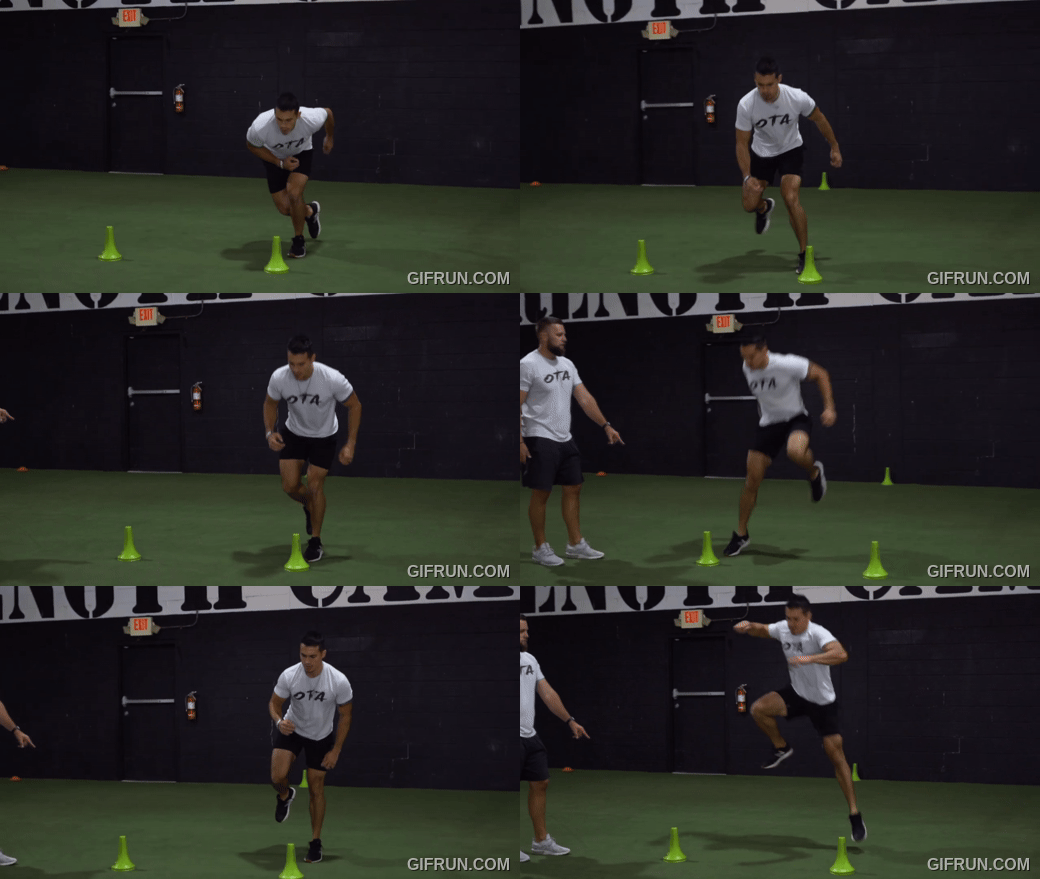
Instead of just going side to side, the athlete reacts to a cue—either from a coach or a partner. This forces them to adjust in real time rather than guessing.
This is where lateral power meets decision-making. You’re not just moving—you’re reacting and producing force in the correct direction.
That’s a big shift from basic agility training.
3. Skater Cone Series (45° to 90°)
Football isn’t played in perfect lines. It’s played in angles.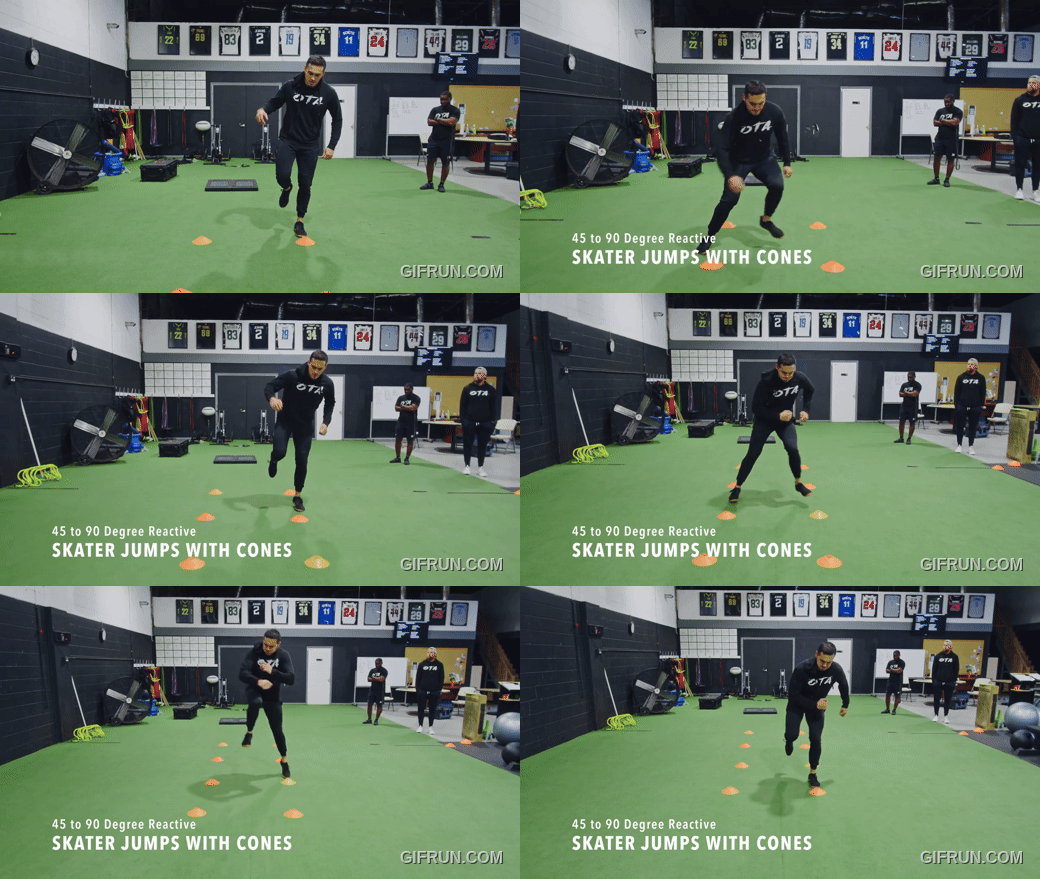
This drill takes lateral movement and the skater drill and progresses it into more game-like cuts. Going from a 45° hop into a 90° cut teaches the body how to redirect force efficiently.
This is where athletes start to feel the difference between “doing a drill” and actually moving like they would in a game. So this drill is just advancing on the reactive skater drill and adding more angles and volume to increase the athletes force production when making cuts.
4. Short Shuttle Drill
This is a classic for a reason—but most athletes don’t use it the right way.
The short shuttle is about deceleration, re-acceleration, and changing direction efficiently. But the real key is competition. Line the athletes up against each other.
When you race another athlete, intensity goes up. Effort goes up. Execution improves.
That’s when you start building real speed—not just going through the motions. The way we make it more reactive is one athlete has to react off the others initial move and still try and beat them.
5. Mirror Drill
This is where true agility training begins.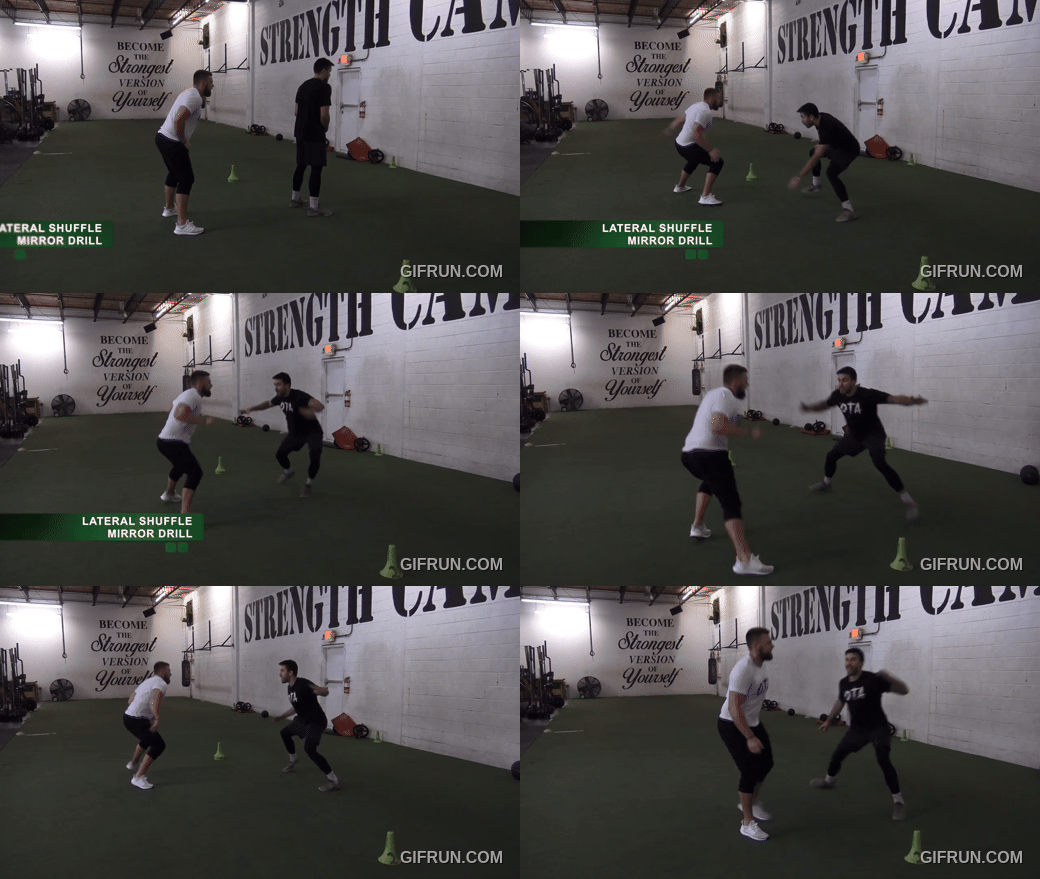
One athlete leads, the other reacts. There’s no pattern, no memorization, no guessing. Just pure reaction.
You’re reading body movement, adjusting your positioning, and reacting instantly.
This is one of the closest things you can get to real football movement in a training setting.
6. Lateral Shuffle to Ball Drop
Now we connect movements together.
The athlete starts with a lateral shuffle, then reacts to a ball drop and immediately transitions into a sprint. This trains the ability to go from lateral movement to linear acceleration—something that happens constantly in football.
It also sharpens reaction time, because the athlete doesn’t know exactly when the ball is dropping.
That unpredictability is what makes it effective.
7. 4 Cone Reactive Drill
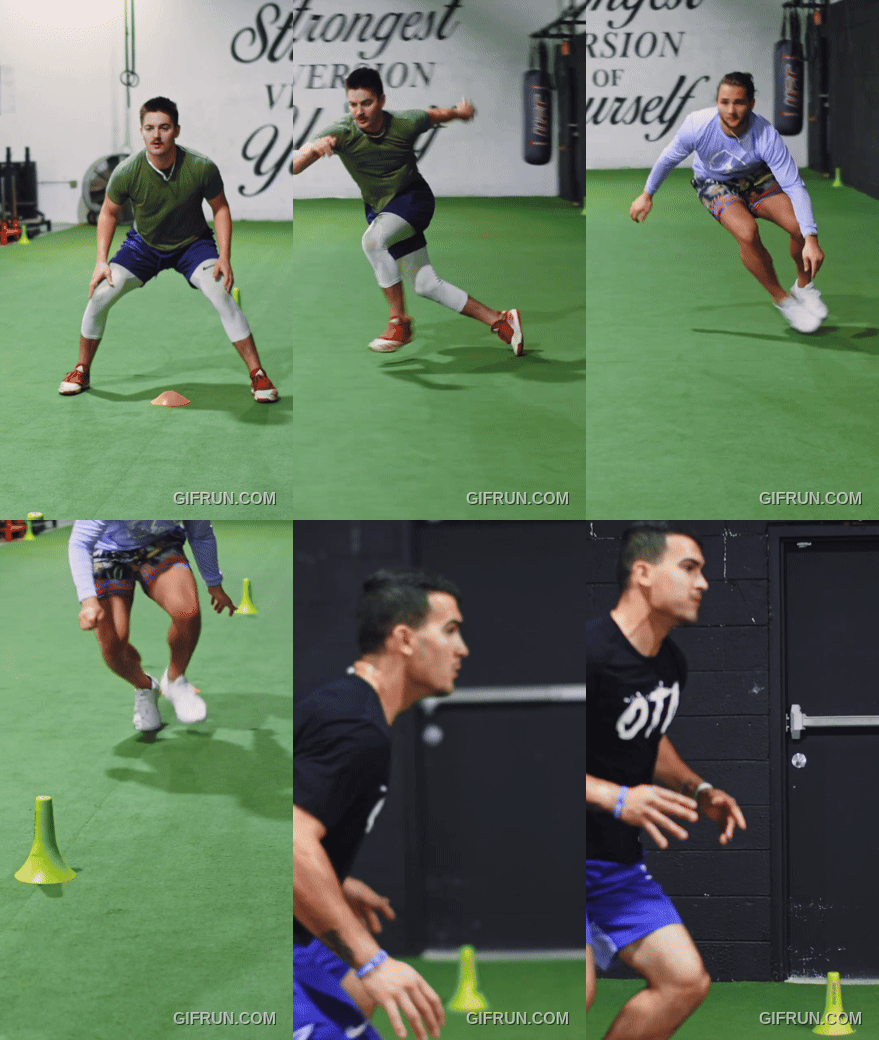
This is controlled chaos—and that’s exactly what you want.
Set up four cones around an athlete. The coach calls out a cone, and the athlete has to react, sprint to it, touch it, and return to the middle.
What makes this powerful is the constant change. Forward, backward, lateral—it’s all being trained in one drill.
There’s no rhythm to rely on. The athlete has to stay ready and react instantly.
That’s game speed.
Train for the Game, Not the Drill
Here’s the difference between average and elite athletes:
Average athletes look good in drills.
Elite athletes perform in games.
The gap comes down to this—reaction.
If your agility training is always pre-planned, you’re training your body to move… but not to think. And football is just as much decision-making as it is movement.
You need both.
Final Thoughts
If you want to actually get faster on the field, your agility training has to evolve.
You need to:
- Build a foundation
- Progress into variability
- Train true reactive movement
That’s how you develop real game speed—the kind that shows up when it matters.
That’s exactly what we do in our Game Speed Agility Program.
We don’t waste time on drills that look good. We train so that the movements transfer directly to the field.
If you’re serious about getting faster, reacting quicker, and dominating on the field, DM us or sign up today and start training like a real athlete.
